







In Honour of Our Founder – Dr. Sue Johnson

In Remembrance of
Dr. Sue Johnson
It is with profound sadness that we announce the passing of Dr. Sue Johnson on April 23, 2024. Dr. Johnson was a beloved teacher, therapist, author, and the pioneering innovator of Emotionally Focused Therapy (EFT). Her remarkable contributions have left an indelible mark on the field of therapy and the lives of countless individuals, couples, and families worldwide. She was also a cherished friend whose warmth and wisdom profoundly touched all who knew her. See the full obituary here.
The Life of Dr. Sue Johnson
I Was Here!
We are proud to present a video tribute to Dr. Sue Johnson, a visionary whose life and work have transformed the landscape of therapy and inspired countless thousands. This tribute recalls her tireless work promoting Emotionally Focused Therapy to mental health professionals and the general public. Join us as we remember these few highlights from her career, raising awareness about how secure attachment bonds are vital to the health and wellbeing of all.

Share Your Memories
Tribute Board
In honour of Dr. Sue Johnson’s remarkable legacy, we invite you to contribute to Sue’s Tribute Board. Celebrate the memory of a visionary whose life’s work in mental health has profoundly touched the lives of so many. Share your personal reflections, stories of transformation, or any other remembrance about Sue. Your tributes will form a mosaic of gratitude for a life truly well-lived. You can post your thoughts here.
Our friends at Psychotherapy Networker have also posted a tribute to Sue here: Celebrating Sue Johnson
What We Do
Healthy relationships are central to human health and happiness. Research consistently shows that secure attachment and emotionally satisfying bonds are essential elements of mental and physical well-being. Emotionally focused therapy (EFT) is uniquely capable of establishing and restoring supportive bonds among individuals, couples and families. The International Centre for Excellence in Emotionally Focused Therapy (ICEEFT) is dedicated to educating health professionals and increasing public awareness about the efficacy of EFT and its role in strengthening relationships.
We invite you to learn more about ICEEFT and EFT. If you’re a mental health professional, we encourage you to explore our many training events and to join our ever-growing global family of over 8000 members, spanning 80 regional communities and centers throughout 40 countries. Whatever your age, race, faith, gender identity, sexual orientation, class, ability, language or cultural background, you are welcome here. See the ICEEFT Mission statement.




An ICEEFT Statement
ICEEFT Statement on the Israel Gaza Crisis
ICEEFT is deeply distressed by the terrible events unfolding in Israel and Gaza, and emphatically condemns all forms of violence. As an organization founded to foster attachment, love, compassion, and strong human relational bonds, the brutal violence and trauma inflicted upon innocent civilians, particularly children, horrifies us. Click to read full statement

An ICEEFT Statement
We Stand with Ukraine
The ICEEFT organization has always stood for humanistic values that support connections and seek to understand and bridge differences between people in romantic relationships, in families, and in communities. ICEEFT denounces the Russian invasion of Ukraine and the devastation and harm that is being caused to innocent people.

ICEEFT Statement
Stance on Diversity
At the International Center for Excellence in Emotionally Focused Therapy (EFT) we are dedicated to developing secure, resilient individuals and successful trusting relationships between partners and within families across the globe. As such, we stand against all forms of racism and discrimination.
Dr. Sue Johnson
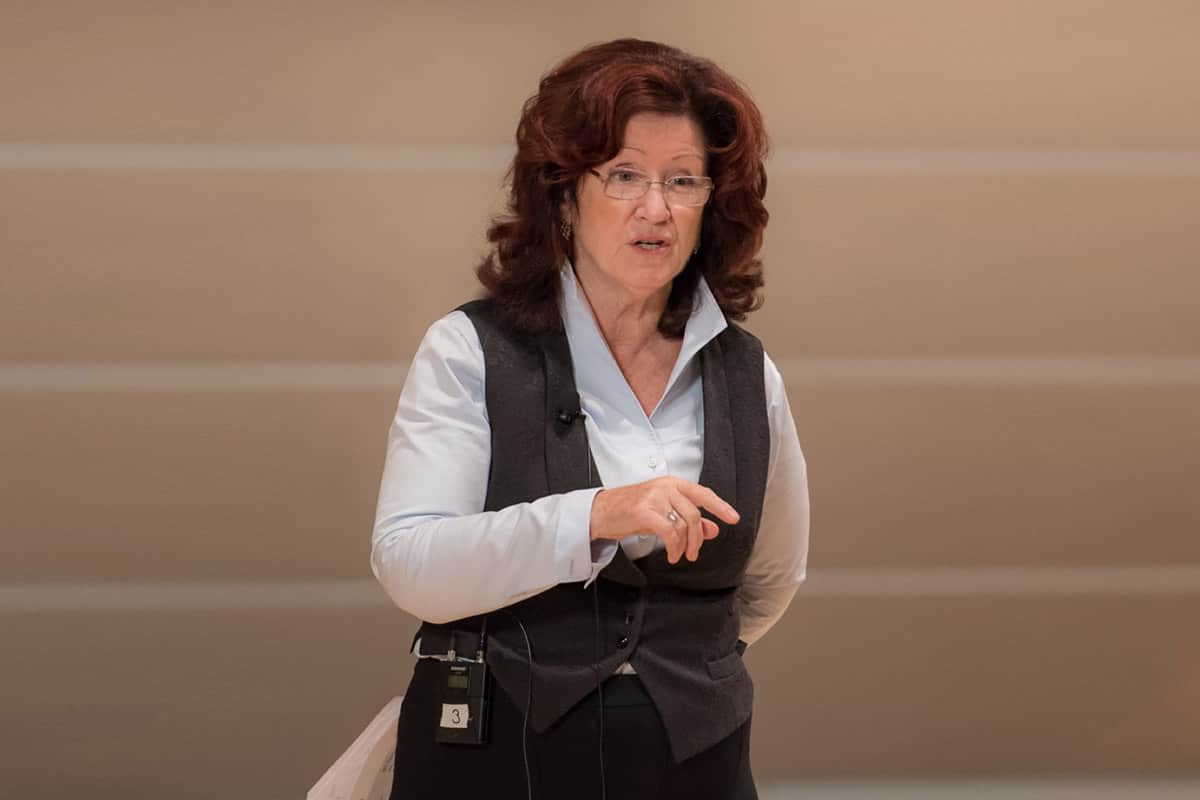
Dr. Sue Johnson is the founder and leading authority on Emotionally Focused Therapy (EFT), a type of therapy that helps individuals, couples and families improve their relationships by understanding and managing their emotions. She has written dozens of books on the topic, including the bestsellers “Hold Me Tight: Seven Conversations for a Lifetime of Love”, “Attachment Theory in Practice” and “A Primer for Emotionally Focused Individual Therapy”. Dr. Johnson is also the founder of ICEEFT and has received numerous awards and recognitions for her contributions to the field of psychology, including the Order of Canada, The Psychotherapy Networker Lifetime Achievement Award, and the American Psychological Association’s Award for Distinguished Professional Contributions to Applied Research.
See Dr. Sue Johnson’s public website at www.drsuejohnson.com
join ICEEFT today!
What Our Members Have to Say
“Joining ICEEFT has helped me personally and professionally. I have benefitted from growing my practice, learning more about stuck spots, and even improved my marriage. What a gift.”
Dr. Dianna Troutt
LMFT, LPCC
“Membership in ICEEFT offers a supportive platform to learn, improve my skills using EFT, connect with different EFT communities around the world, and allows potential clients to find me.”
Aaron Ong
MCounsPrac., MFT
“My ICEEFT membership has helped me to feel a part of the EFT community. It’s a special group of clinicians dedicated to the highest standard of clinical care in the area of Emotionally Focused Therapy.”
Katy Oberle
MS, IMFT-S
“I get many clients through the find a therapist directory and love staying connected through the newsletter. Membership in ICEEFT is a needed resource for anyone practicing EFT.”
Stephanie Macadaan
M.A., LMFT
ICEEFT membership opens the door to a vibrant international community of over 8000 mental health professionals in over 40 countries. As an ICEEFT member, you can connect with other mental health professionals, expand your knowledge and, together with your colleagues, continually deepen your skills to become the best, most inspired, and most competent therapist you can be.
Your membership in our professional family links you to cutting-edge research, world class training, members-only mailing lists, and the support of diverse local and international communities.
Full ICEEFT membership is open to mental health professionals who have completed an Externship in EFT. If you haven’t yet taken an Externship, you can find one near you by visiting our events page here. Effective in January, 2024, membership is open to therapists who have completed either the EFIT or EFFT Essentials Course (or the previous corresponding Levels 1 and 2 courses). In the meantime, you can still join as an Associate or Student at a reduced rate.